

The main difference between Transmission Control Protocol (TCP) and User Datagram Protocol (UDP) is that TCP is a connection-oriented protocol, and UDP is a connectionless protocol. Both protocols are used to send data over the network, but they do so in different ways. TCP establishes a connection between two nodes before sending the data, while UDP sends the data without establishing a connection first. TCP is more reliable since it ensures the data will reach the destination node, while UDP does not guarantee this. Additionally, TCP provides error correction and flow control features not presented in UDP. Therefore, it is essential to understand these two protocols' differences to choose the one best suited for a given task.
 #image_title[/caption]
TCP/IP, or Transmission Control Protocol/Internet Protocol, is a set of communication protocols that enable data exchange across networks. It is the primary protocol for communication over the Internet and other large computer networks.
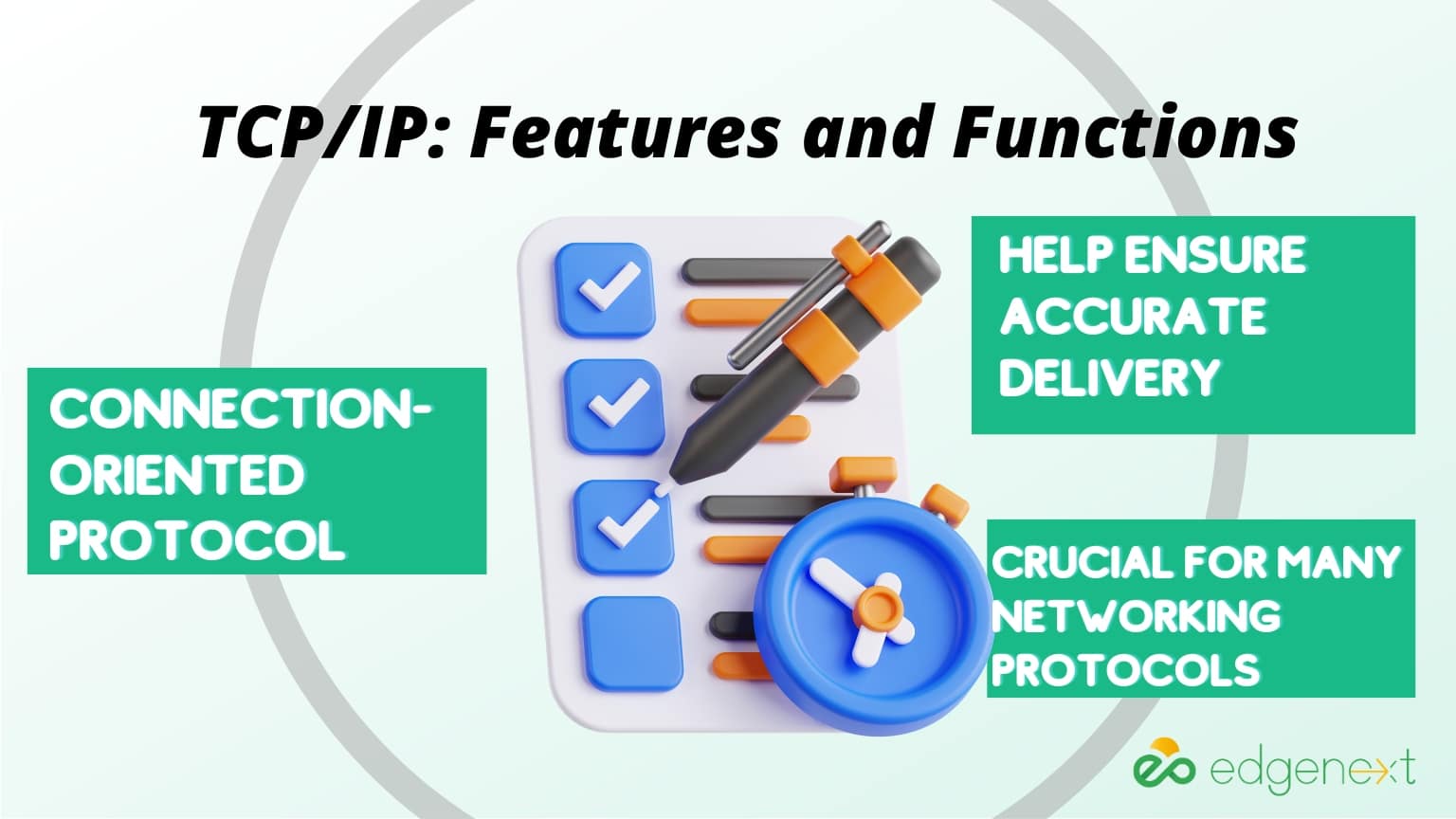
At its core, TCP/IP is a connection-oriented protocol that allows for reliable delivery of messages between computers. This means that, for two devices to communicate, they must first establish a connection. Once this connection is established, data can be transmitted to the receiving device with minimal disruption. TCP/IP also includes features that help ensure accurate delivery of messages, such as error checking and correction.
TCP/IP is used in many everyday applications and services requiring reliable network communication. It is used for email and file transfer applications and web browsing. Voice over IP (VoIP) technologies, such as Skype, also rely on TCP/IP to enable voice communication over the internet. Additionally, it is crucial for many networking protocols that allow computers to communicate with each other on a local area network (LAN).
#image_title[/caption]
TCP/IP, or Transmission Control Protocol/Internet Protocol, is a set of communication protocols that enable data exchange across networks. It is the primary protocol for communication over the Internet and other large computer networks.
At its core, TCP/IP is a connection-oriented protocol that allows for reliable delivery of messages between computers. This means that, for two devices to communicate, they must first establish a connection. Once this connection is established, data can be transmitted to the receiving device with minimal disruption. TCP/IP also includes features that help ensure accurate delivery of messages, such as error checking and correction.
TCP/IP is used in many everyday applications and services requiring reliable network communication. It is used for email and file transfer applications and web browsing. Voice over IP (VoIP) technologies, such as Skype, also rely on TCP/IP to enable voice communication over the internet. Additionally, it is crucial for many networking protocols that allow computers to communicate with each other on a local area network (LAN).
 #image_title[/caption]
Introduction
Communication protocols are essential for the efficient operation of network systems. TCP/IP and UDP are commonly used transport protocols that enable data exchange. This blog post will explore the differences between TCP/IP and UDP by examining their features, functions, uses in real-world applications, and essential factors to consider when choosing between them. Network managers can make the best decisions by understanding these features and differences.Understanding Communication Protocols: Basics
Communication protocols are rules that govern the exchange of information over a network. They enable connected devices to communicate with each other without requiring any detailed knowledge from their user. Protocols provide a common language for digital data transmission, allowing computers and other connected devices to interact with one another efficiently. Without such protocols, it would be virtually impossible for users to access web pages, use email services, or communicate online. Protocols are responsible for managing data transmission over networks through various techniques. They provide encoding methods, such as compression and error correction, that help ensure accurate delivery of messages. They also define how data is addressed and routed across networks by determining which computers should receive a message and how it should be sent to its destination. Protocols also establish rules for data flow control, which help manage the flow of information efficiently. By carefully managing these factors, communication protocols enable reliable and secure data exchange between connected devices.III. TCP/IP: Features and Functions
[caption id="attachment_12133" align="alignnone" width="1536"] #image_title[/caption]
TCP/IP, or Transmission Control Protocol/Internet Protocol, is a set of communication protocols that enable data exchange across networks. It is the primary protocol for communication over the Internet and other large computer networks.
At its core, TCP/IP is a connection-oriented protocol that allows for reliable delivery of messages between computers. This means that, for two devices to communicate, they must first establish a connection. Once this connection is established, data can be transmitted to the receiving device with minimal disruption. TCP/IP also includes features that help ensure accurate delivery of messages, such as error checking and correction.
TCP/IP is used in many everyday applications and services requiring reliable network communication. It is used for email and file transfer applications and web browsing. Voice over IP (VoIP) technologies, such as Skype, also rely on TCP/IP to enable voice communication over the internet. Additionally, it is crucial for many networking protocols that allow computers to communicate with each other on a local area network (LAN).
UDP: Features and Functions
UDP, or User Datagram Protocol, is another commonly used protocol for network communication. UDP is a connectionless protocol, unlike TCP/IP, based on a connection-oriented model. This means devices sending messages do not need to establish a connection before data transmission. UDP can provide faster transmission speeds and lower latency than TCP without creating and maintaining connections between two computers. However, UDP is an unreliable protocol, meaning that data sent through it may not always reach its destination or arrive in the order it was sent. This can benefit certain applications where accuracy is less important than speed, such as streaming media or online gaming. The lack of reliability also means that UDP requires less overhead since there is no need to ensure accuracy for delivery. Common applications that rely on UDP include video streaming, gaming, Domain Name Service (DNS) lookups, and Voice over IP (VoIP). These services are particularly well-suited for UDP due to the protocol’s fast transmission and low latency.Comparing TCP/IP and UDP: A Side-by-Side Analysis
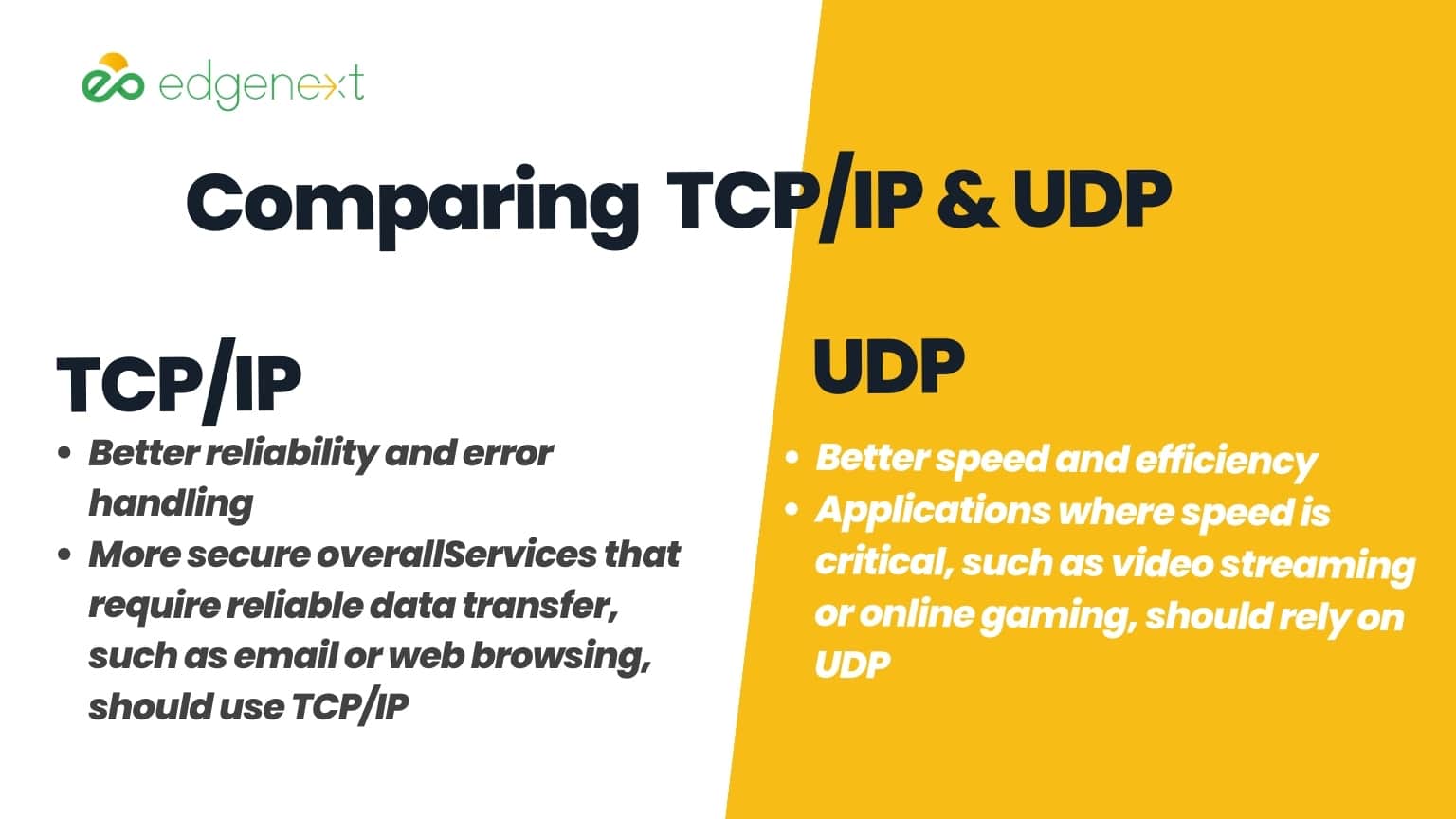
Regarding reliability and error handling, TCP/IP is the clear winner. It includes features such as data compression, error correction, and flow control that help ensure accurate delivery of messages. UDP does not provide these features, so there is no guarantee that data sent over this protocol will reach its intended destination or arrive in the same order it was sent in. In terms of speed and efficiency, UDP is the superior method. Since it does not require connection establishment before data transmission, messages can be sent faster and with lower latency than TCP/IP. Additionally, its lack of error correction features also means that it requires less overhead for data transmission. Due to these distinctions, different use cases and applications are better suited for TCP/IP or UDP. Generally, services that require reliable data transfer, such as email or web browsing, should use TCP/IP. On the other hand, applications where speed is critical, such as video streaming or online gaming, should rely on UDP. Finally, it is crucial to consider security considerations when choosing between TCP/IP and UDP. Both protocols can be secured using encryption, but TCP/IP is more secure overall due to its connection-oriented model. Additionally, some applications may require using one protocol over another for security reasons, such as VPNs, which typically rely on TCP/IP for data transmission. [caption id="attachment_12134" align="alignnone" width="1536"] #image_title[/caption]